Summer AC Maintenance Checklist: Keep Your Cooling System Running Through SWPA Heat & Humidity
A Washington PA summer can bring hot afternoons, sticky humidity, and long stretches when your air conditioner runs nearly nonstop. A little maintenance before and during the cooling season can help your system deliver steadier comfort, avoid preventable breakdowns, and protect your home from water damage.
If you are searching for a summer AC maintenance checklist for a home in Southwestern PA, start with the tasks you can safely handle yourself. Then schedule a professional check-up for the electrical, refrigerant, and mechanical work that should not be left to guesswork.
Start with the air filter
Your air filter is one of the simplest parts of the system to inspect, and one of the easiest to overlook. ENERGY STAR recommends checking the filter every month, especially during heavy-use months such as summer. If it looks dirty after a month, change it; at a minimum, change it every three months. See the guidance at ENERGY STAR.
A loaded filter restricts airflow. That makes the equipment work harder, can leave some rooms warmer than others, and may contribute to dirt collecting inside the system. Use the filter size and type recommended for your equipment, and make sure the arrow on the frame points in the direction of airflow. If you are unsure which filter your system needs, a McVehil technician can help you choose a practical option rather than simply the most expensive one.
Give the outdoor unit room to breathe
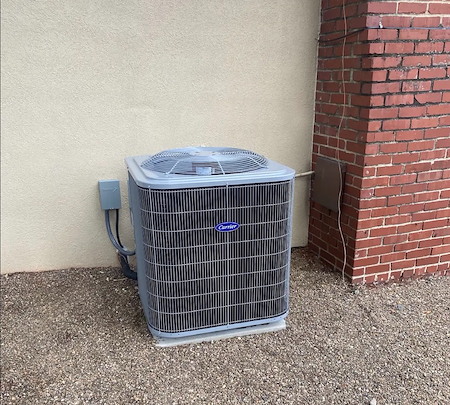
Walk around the outdoor condenser and remove grass clippings, leaves, weeds, and other debris that have gathered near the cabinet. Keep plants and stored items from crowding the unit. Good clearance lets the condenser release heat more effectively and makes it easier for a technician to inspect the equipment.
Turn off power at the disconnect before attempting any cleaning near the unit. Do not bend the delicate metal fins, open electrical panels, or spray water into places you cannot see. A gentle hose rinse from the outside can be appropriate for light surface dirt, but stop if the coil is heavily impacted or the unit is not operating normally. That is a job for a trained professional.
Check the air moving through your home
With the system running, visit each supply register and return grille. You should feel a consistent flow of cool air at the supplies, and return grilles should not be blocked by furniture, rugs, or dust. Make sure registers are open unless a McVehil professional has recommended a specific balancing plan.
Weak airflow, a whistling sound, or a room that never catches up may point to more than a dirty filter. Possible causes include a blower problem, duct leakage, a frozen coil, or an airflow restriction. ENERGY STAR notes that airflow problems can reduce system efficiency by up to 15 percent; its maintenance checklist is available at ENERGY STAR's maintenance checklist.
Keep an eye on the condensate drain
Air conditioning removes moisture from indoor air. That water normally flows through a condensate line to a drain or pump. If the line becomes clogged, water can back up around the indoor equipment, stain ceilings, damage flooring, or raise indoor humidity.
Look for unusual puddles, damp insulation, musty smells, or a full drain pan near the indoor unit. Do not take apart the equipment or pour chemicals into a drain line unless the manufacturer or a qualified technician has specifically instructed you to do so. ENERGY STAR cautions that a plugged condensate drain can cause water damage and affect indoor humidity. Read more at ENERGY STAR's maintenance checklist.
Notice the warning signs early
Your air conditioner may need attention if it runs constantly without reaching the thermostat setting, blows warm air, cycles on and off repeatedly, makes a new grinding or buzzing sound, or produces an unusual odor. Ice on the refrigerant line or indoor coil is another reason to turn the system off and call for service rather than continuing to run it.
Do not assume every cooling problem means you need a new system. A dirty coil, failed capacitor, clogged drain, electrical issue, or airflow restriction may be repairable. An honest diagnosis should explain what failed, what can be repaired, and what replacement would change before you make a major decision.
Schedule a professional tune-up
A spring appointment is ideal, but it is not too late to schedule a summer check-up if your system has not been serviced. ENERGY STAR recommends annual pre-season check-ups and says the cooling system is best checked in spring, before contractors become busy in summer. The same guidance explains that a typical cooling visit may include checking thermostat settings, tightening electrical connections, lubricating moving parts, inspecting the condensate drain, checking controls, and confirming the starting cycle.
A qualified technician should also inspect the evaporator and condenser coils, verify refrigerant level, and check blower components. Refrigerant is not a routine “top-off” item; an unexpected low charge can indicate a leak or another system problem that needs to be diagnosed. Electrical measurements and refrigerant work require the right training and equipment, so do not attempt them as a do-it-yourself project.
Help your AC handle SWPA humidity
A comfortable home is not only about the number on the thermostat. When humidity is high, the air can feel warmer, and the system may need more time to remove moisture. Keep doors and windows closed while the AC is operating, use kitchen and bathroom exhaust fans when appropriate, and avoid placing heat-producing appliances next to the thermostat.
If the house still feels damp even when the air conditioner runs, ask a professional to evaluate system sizing, airflow, the condensate setup, and ductwork. Running the thermostat much colder is not always the best solution, and it can make comfort and operating costs worse.
A dependable summer starts with a simple plan
Check the filter monthly. Keep the outdoor unit clear. Watch airflow and drainage. Treat new noises, ice, leaks, and warm air as reasons to investigate early. Then put an annual tune-up on the calendar before the next heat wave arrives.
McVehil has served Washington PA, Southwestern PA, and Northern WV since 1909. Our family-owned team focuses on professional, customer-centered service, honest up-front pricing, and 24/7 help when a cooling problem cannot wait. If your AC needs a tune-up, repair, or replacement conversation, call McVehil at 724-225-3500 or request a quote. We will help you understand the options and choose the next step that makes sense for your home.

Request a Quote and Experience the McVehil Difference! Contact Our Local Plumbers and Heating and Cooling Experts Today!